

June 19, 2026 · Metro Cabinet Company Design Team · Trends · Design Trends · Kitchens
BEST Cabinet Materials Guide – Kitchen Cabinet Materials in Florida: MDF, Wood, Plywood
When designing a kitchen, the materials you select dictate not just the aesthetic, but the longevity and structural integrity of the space. The most common materials used for cabinets are premium mdf, hardwood, and multi-ply plywood. Each serves distinct, highly specialized purposes in modern residential and commercial cabinetry construction. Whether you are aiming for a sleek contemporary mid-century modern aesthetic with high-gloss slab doors or a traditional beaded inset design, understanding the specific roles of these materials is crucial for a successful build. From a budget-conscious perspective, material choice significantly impacts both upfront cost and long-term resale value, making it essential to compare pros and cons before committing to a material selection.
Plywood: The Backbone of Cabinet Construction – Kitchen Cabinet Materials in Florida
Plywood is widely considered the gold standard for constructing the structural “boxes” of the cabinets. Plywood is an engineered wood product made by gluing together thin layers of wood veneer with alternating grain directions. This cross-grain construction gives plywood excellent structural strength and allows it to hold hinges and screws securely. Quality plywood offers superior screw-holding power and weight capacity compared to particleboard alternatives, with void-free construction ensuring a consistent density rating throughout each sheet.
However, plywood is rarely used for flat, painted door surfaces. Because of its layered construction, the natural grain and imperfections of plywood can cause “telegraphing,” a phenomenon where textures or ripples show through a painted or veneered surface. To achieve a clean look inside the cabinet box, makers often apply a natural birch or maple veneer over the plywood interior rather than painting it directly. Professional contractors typically recommend CARB-compliant and FSC-certified plywood options to ensure low VOC emissions and better indoor air quality, addressing common health concerns about formaldehyde off-gassing in cabinet materials.
Wood: Classic Material for Frames and Stains
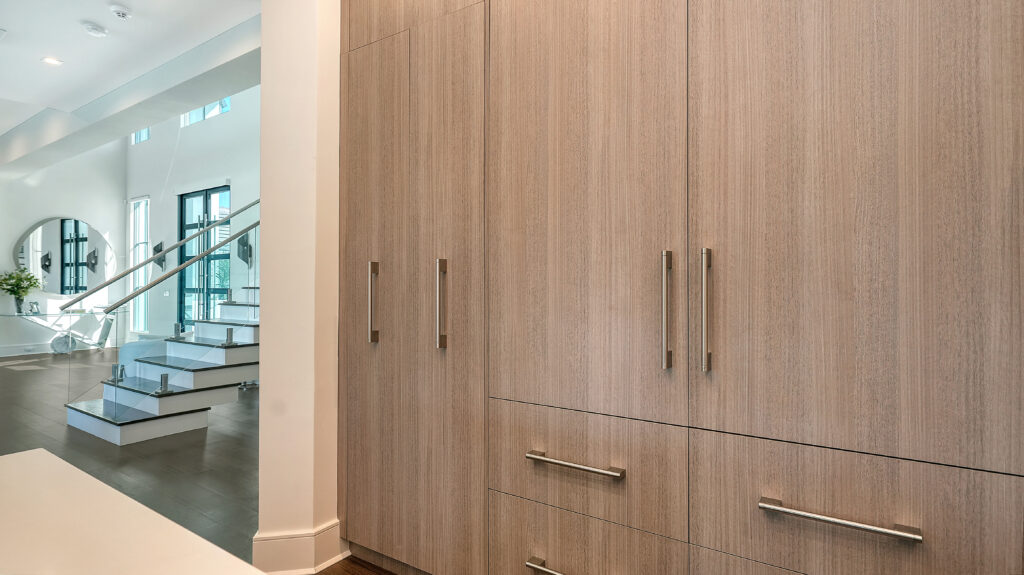
Solid wood remains a classic choice, particularly for traditional styles like shaker cabinets, which typically feature a solid wood frame. However, wood is a living material that responds to its environment. Solid wood expands and contracts as it absorbs and releases moisture in response to changes in humidity. Popular hardwood species like oak, alder, and hickory each offer distinct grain patterns, color variations, and moisture resistance that influence both price comparisons and maintenance requirements over the cabinet’s lifespan.
In addition, wood undergoes a natural aging process known as oxidation, which changes its color when exposed to ultraviolet (UV) light and oxygen. The most dramatic color changes in wood typically occur within the first year of exposure to light and air. While woods like cherry darken with age, walnut actually gets lighter and develops a warm honey tone over time. Because of these characteristics, solid wood is often reserved for stained finishes where the natural aging process enhances the beauty of the cabinetry. From a designer perspective, specifying kiln-dried, quarter-sawn, or rift-sawn lumber can minimize wood movement and provide more stable, premium results, though these options increase the budget.
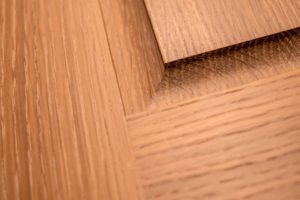 Wood undergoes a natural oxidation process and changes color when exposed to ultraviolet (UV) light and oxygen. The most dramatic color changes in wood typically occur within the first year of exposure to light and air. While woods like cherry darken with age, walnut actually gets lighter and develops a warm honey tone over time. Because of these characteristics, solid wood is often reserved for stained finishes where the natural aging process enhances the beauty of the cabinetry.
“Wood is like a living organism. When you cut it, it still absorbs moisture and changes dramatically in the first six months of its life.”
Here is a quick reference guide to how some common solid wood species age over time:
| Wood Species | Initial Appearance | Aged Appearance |
|---|---|---|
| Cherry | Light pinkish-brown | Darkens to a rich reddish-brown |
| Walnut | Dark, consistent brown | Lightens to a warm, golden honey tone |
| Maple | Light, bright white/cream | Yellows or takes on a darker honey color |
| Oak | Warm tan with prominent grain | Deepens to golden amber |
| Alder | Pale reddish-brown | Mellow to medium brown |
MDF Cabinets: Perfect Canvas for Paint and Veneers Near You in Florida
To solve the challenges of solid wood movement and plywood telegraphing, the industry relies heavily on MDF. MDF stands for Medium Density Fiberboard, an engineered material made by combining fine wood fibers with wax and resin under heat and pressure. Manufacturers produce MDF in various thickness options and sheet sizes, with moisture-resistant formulations available for areas prone to humidity damage.
MDF is dimensionally stable and does not expand and contract with humidity changes as drastically as solid wood does. Because it lacks a natural wood grain, MDF provides a perfectly smooth surface that is ideal for painted finishes. This makes MDF an affordable option for homeowners seeking easy-to-clean, low-maintenance cabinets with custom prefinished or unfinished surfaces.
In modern cabinet making, it is common industry practice for painted shaker doors to use a solid-wood outer frame with an MDF center panel to prevent paint cracking at the seams. This hybrid approach balances cost with quality, as proper material selection ensures durability while keeping the project within budget for both DIY and professional installation scenarios.
Choosing the Right Finish for MDF Slab Doors
Laminates and Veneers: Applied directly to the MDF substrate for a smooth, wood-like appearance without the risk of warping. Melamine and thermofoil are popular laminate options offering scratch-resistant, waterproof surfaces with minimal maintenance requirements and a quick cure time.
Acrylic or Polymer: Specialized plastics that simulate the look of high-gloss lacquer but offer greater durability and impact resistance. These contemporary finishes provide UV-resistant and fade-resistant protection with various sheen levels, making them versatile for both residential and commercial-grade applications.
High-Gloss Lacquer: Achieves a stunning 80-sheen mirror finish through a rigorous multi-step painting and buffing process. However, high-gloss lacquer finishes are brittle and more susceptible to chipping compared to modern acrylic alternatives. Professionals must prime, seal, and sand between coats, with an extended dry time required before installation.
Alternative Cabinet Materials Worth Considering in Florida
Beyond the three primary materials, homeowners comparing material options should understand additional choices. Particleboard offers the most budget-friendly option, but has lower screw holding power and moisture resistance compared to plywood. Bamboo provides an eco-friendly, sustainable alternative with natural heat resistance and unique grain patterns. For ready-to-assemble cabinets, manufacturers often use a combination of these materials to balance affordability with structural performance.
Material Selection: Cost and Quality Indicators Near You
When deciding which material is best for your project, consider these quality indicators from a contractor’s perspective: edge banding quality on exposed edges, face frame construction method (frameless cabinets vs traditional overlay), and hardware compatibility with drawer boxes and shelving. Common mistakes to avoid include selecting materials based solely on price without considering long-term maintenance, repair options, and warranty coverage. Proper adhesive selection and understanding moisture content specifications help ensure your investment delivers strong return on investment and increased home value.
Installation and Maintenance Considerations
From an installer perspective, different materials require different approaches. Heavy-duty plywood cabinet boxes need proper mounting and leveling to support weight capacity, while lightweight MDF components may require reinforcement at stress points. DIY vs professional installation difficulty varies significantly—frameless cabinets and custom configurations often demand professional expertise to measure, assemble, and mount correctly. Understanding cleaning methods, maintenance requirements, and repair options for each material helps homeowners make informed decisions about long-term care and environmental impact.
Cabinet Materials: Conclusion
Understanding how these materials work together is the key to a beautiful and lasting kitchen. By utilizing certified, void-free plywood for strong cabinet boxes, solid kiln-dried hardwood for sturdy frames, and CARB-compliant MDF for flawless, stable panels, cabinet makers can deliver high-quality results that stand the test of time and environmental changes.
Whether you prioritize sustainability, indoor air quality, or budget constraints, comparing the pros and cons of each material—including raised panel vs recessed panel door styles, crown molding options, toe kick details, and hardware like pulls and knobs—ensures you select the best combination for your specific needs and achieve optimal resale value. If you’re searching for custom cabinets in Sarasota, Boca Grande, or elsewhere along the Gulf Coast, our team can help you select the right materials and finishes to create your ideal kitchen.
Ready to start your next design project?
We’re here to help.
Call us at (941) 377-8777 or visit us at metrocabinetcompany.com

Beautiful design has the power to transform lives
-Billue Guignard

