


July 8, 2026 · Metro Cabinet Company Design Team · Kitchens
BEST Cabinet Surfaces in Sarasota, FL – Cabinet Veneers Near You in Florida
Cabinet Surfaces Guide: Paint, Lacquer, Veneers, Stain
From the timeless appeal of natural wood to the ultra-modern shine of high-gloss surfaces, the choices you make will define the entire look and feel of your space. This comprehensive guide will explore the core components of modern cabinetry design, specifically focusing on paint, lacquer, veneers, stain, surface finish materials used for cabinets, and how they interact with different construction methods, including hardware selection, finish application techniques, and long-term maintenance considerations.
 The Shift Toward Modern Cabinet Veneers & Finishes for Homes Near You
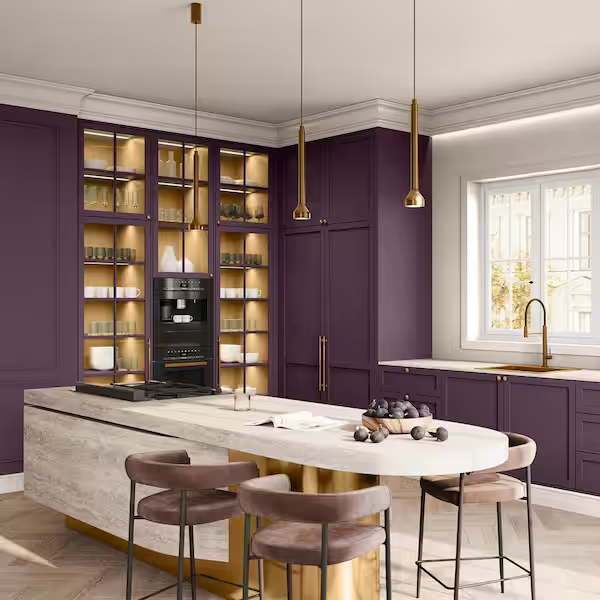
For many years, the standard in kitchen design was the classic white shaker cabinet built on a plywood box. However, the market has seen a significant shift toward “soft modern” or “organic modern” styles. This evolution has led to a rise in demand for slab doors: flat panels without the traditional rails and stiles that frame a shaker door. Achieving this sleek, minimalist look requires specialized materials and finishes that can deliver a flawless, uninterrupted surface. From a budget-conscious perspective, understanding these material differences helps homeowners balance aesthetic goals with ROI on investment and resale value.
Lacquer Cabinet Finishes vs. Acrylic and Polymer Finishes in Florida
When clients request a high-end, modern aesthetic, they often ask for a high-gloss lacquer finish. Lacquer is essentially a specialized paint characterized by its sheen level. High gloss lacquer finishes are often measured at an 80 sheen level, indicating a highly reflective, mirror-like surface.
Achieving a true high-gloss lacquer is a labor-intensive, multi-step process involving repeated painting and buffing in highly controlled environments. Professional finishers spray lacquer finishes in specialized booths to ensure proper curing and minimize VOC exposure. Because of the cost and environmental regulations associated with this process, many homeowners and designers turn to synthetic alternatives like conversion varnish or polyurethane topcoats.
- Durability: Lacquer finishes are generally more brittle and susceptible to chipping compared to acrylic or polymer alternatives, which offer superior scratch-resistant and heat-resistant properties.
- Cost-Effectiveness: Acrylic and polymer cabinet finishes are durable, plastic-based materials often used as a cost-effective alternative to simulate high-gloss lacquer. These affordable, low-maintenance options appeal to budget-conscious homeowners seeking premium aesthetics without custom pricing.
- Maintenance: While high-gloss lacquer cannot be easily touched up if damaged, lower sheen paints and acrylics offer more forgiving maintenance. Homeowners can clean these surfaces with standard household products and repair minor damage without professional refinishing services.
Substrates: MDF vs. Plywood – Cabinet Finishing Near You
The foundation beneath the finish is just as important as the finish itself. While plywood is highly sought after for cabinet box construction due to its structural strength, it is not always the best choice for the doors themselves, particularly when applying slab veneers or high-gloss paints. From a contractor’s perspective, selecting the appropriate substrate impacts both installation efficiency and long-term warranty coverage.
Medium-Density Fiberboard (MDF) is an engineered wood product manufactured by combining wood fibers with wax and a resin binder under high heat and pressure. Standard MDF typically has a density ranging between 500 and 1,000 kilograms per cubic meter. Quality-focused manufacturers now offer CARB-compliant and GREENGUARD-certified MDF options that reduce formaldehyde emissions, addressing concerns about indoor air quality.
MDF is the preferred substrate for slab doors, high-gloss lacquers, and laminates because of its stability. MDF provides a uniformly smooth surface that prevents “telegraphing,” a phenomenon where the underlying wood grain or core imperfections show through the final painted or veneered finish. Before applying primer and topcoat layers, professionals sand and seal the MDF to create an optimal foundation for durable, waterproof finishes.
Wood Cabinet Veneers, Stains, and Solid Wood
Despite the popularity of painted and glossy finishes, natural wood remains a staple in organic modern design. Species like rift-cut white oak and walnut are highly prized, though sourcing high-quality solid wood and premium hardwood with desirable grain patterns has become increasingly difficult and expensive. As a result, beautiful man-made laminates and natural wood veneers applied over MDF substrates have become prevalent. Many manufacturers warranty these factory-finished veneer products with 5-year warranty coverage, providing peace of mind from a long-term value perspective.
Wood is still a living organism. It stores moisture, it changes, and it oxidizes dramatically in the first six months of its made life.
Billue Guignard, Owner, Metro Cabinet Company of Sarasota
When working with real wood and stains, it is crucial to understand how the material ages. Natural wood undergoes photochemical degradation, meaning it changes color and oxidizes over time when exposed to environmental factors like UV light. For example, when exposed to sunlight, walnut wood typically lightens and shifts from a dark, cool brown to a warmer amber or orange hue over time. To protect against UV-resistant degradation, professional finishers apply specialized sealers with UV-resistant additives that slow oxidation and maintain color consistency.
The Reverse Raised Panel Technique – Cabinet Surface Materials
If you prefer a traditional shaker style with a stained finish, consistency in aging is vital. A standard shaker door features a solid wood frame (rails and stiles) with a center panel. If the center panel is a thin veneer, it will absorb stains and age differently than the solid-wood frame.
To solve this, high-end cabinet makers use a specific technique. A reverse raised-panel door uses a solid wood center panel machined to sit flush with the frame on the front while maintaining a raised profile on the back. This ensures that the entire door is made of solid wood, allowing it to stain, oxidize, and age uniformly. This handcrafted, fully-custom approach represents premium cabinetry from a quality-focused perspective, often commanding a higher price per linear foot but delivering superior long-term value and resale value.

Beautiful design has the power to transform lives
-Billue Guignard

